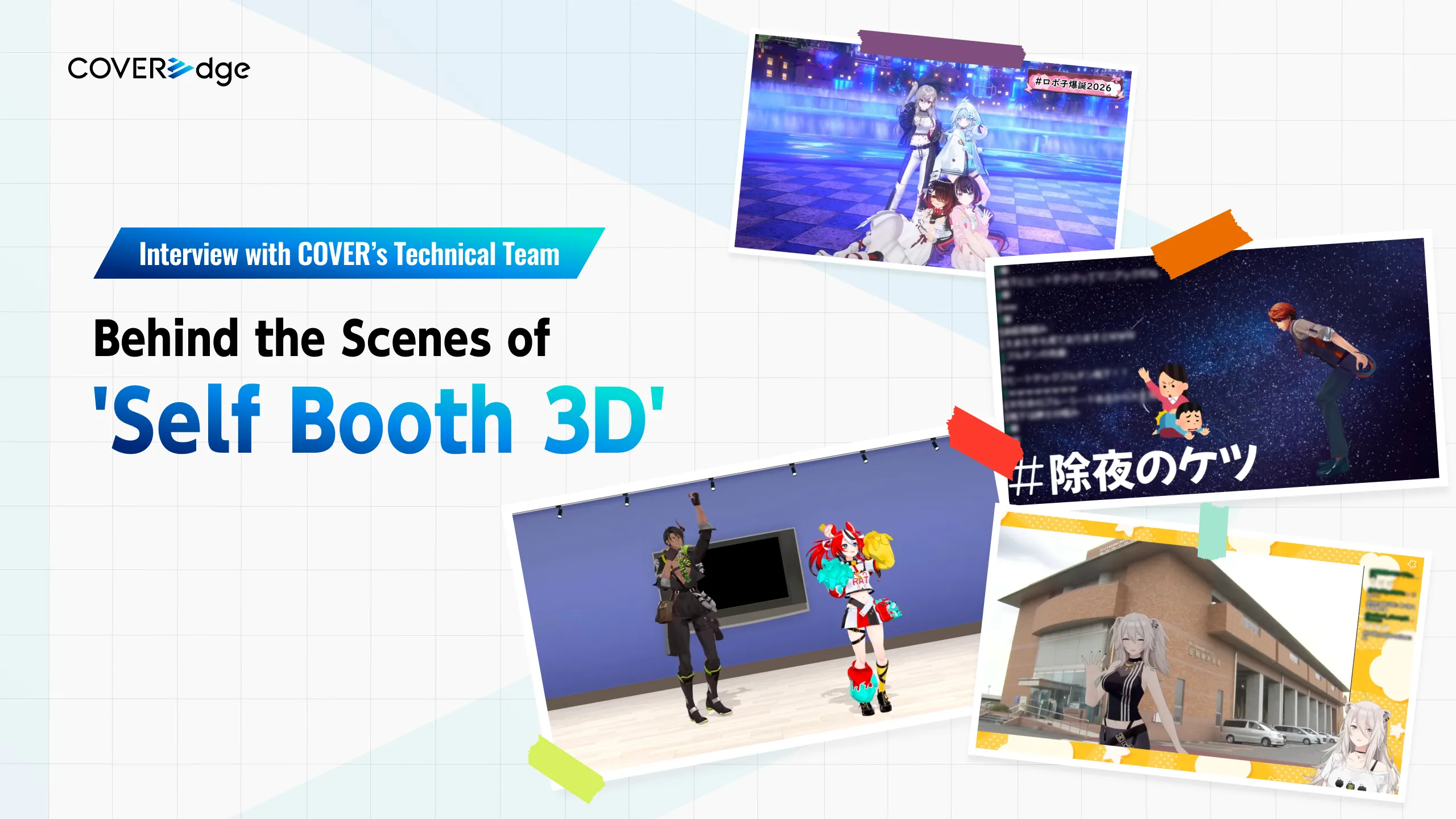
3D streams from hololive production talents, which are showcased at anniversary live performances and major events, are among the most popular content for fans, thanks to their high-quality 3D visuals. However, because traditional 3D streams require substantial time and human resources to prepare and deliver, opportunities to host them have been limited.
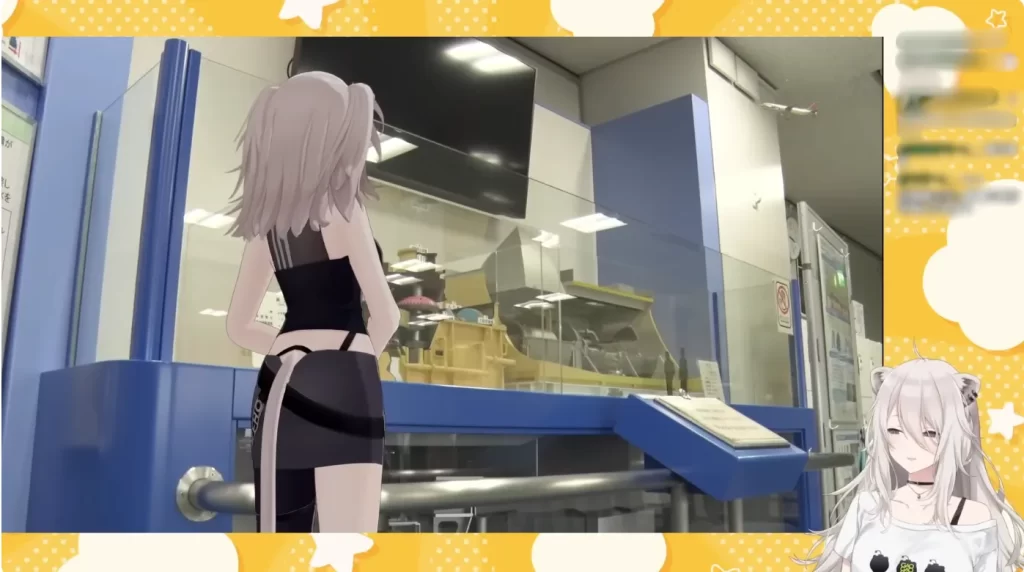
This is why “Self Booth 3D*” was developed. This streaming system leverages “Captury*”—a technology that digitizes skeletons in real time using camera footage alone, without markers or special suits. Talents can easily start a 3D stream once they step into the booth in their everyday wear because of its intuitive UI design that allows talents to operate it themselves. Ever since its full-scale rollout in May 2025, it has continued to make a wide variety of 3D streams possible that were previously difficult to offer, including karaoke streams, dance lesson streams, and outdoor on-location streams.
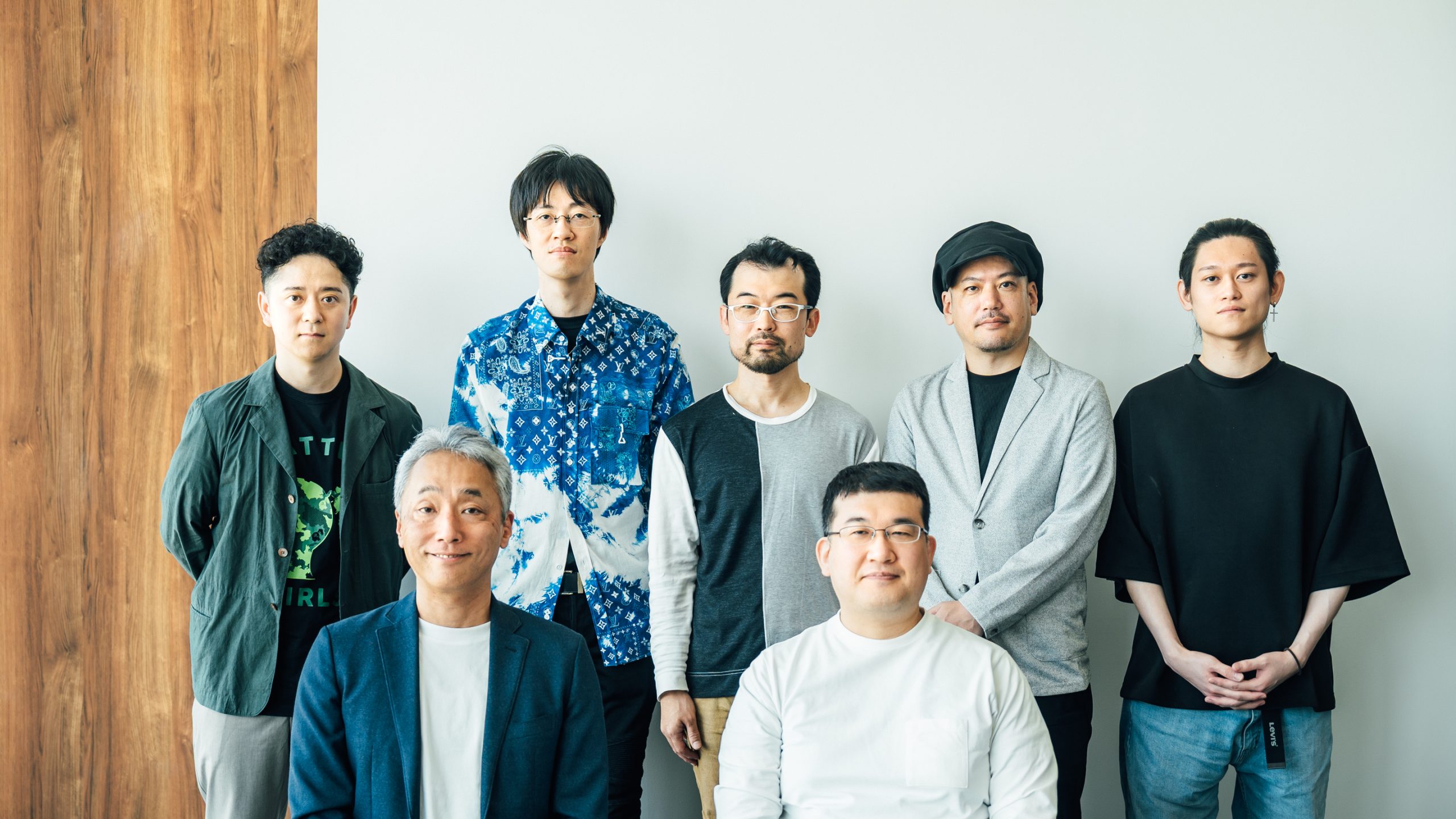
Two main teams support this system behind the scenes, each with distinct roles: the Technology Development Division handles software development, and the Livestream Technology Division manages on-site operations. How did this system come to life, and how did it take root in operations on set through collaboration between these teams? We spoke with six members of the Livestream Technology Division and the Technology Development Division of the Creative Production Department to learn about its development and future outlook.
(Interviewed in June 2026)
*Press release: “COVER Corporation unveils a use case of “Self Booth 3D” that utilizes a markerless motion capturing system”
https://cover-corp.com/news/detail/c20260220 (February 20, 2026, available in Japanese only)
*Captury is a real-time markerless motion-capturing system provided by DARI Motion, Inc. https://www.acuity-inc.co.jp/products/captury/
Livestream Technology Division, Creative Production Department
- N.N. Assistant Manager and Studio Operations Director, Studio Operations
Coordination Team - Y.I. Team Leader and Technical Director, Technical Direction Team
- Y.A. Team Leader, App Team
Technology Development Division, Creative Production Department
- H.K. Assistant Manager, Development Team #4
- K.N. Lead Engineer, Development Team #4
- Y.K. Director, Development Team #4
Making 3D Streaming More Accessible: The Journey to the Creation of Self Booth 3D
―First, could you explain how “Self Booth 3D” differs from traditional 3D streaming?
Self Booth 3D is a system that lets talents host 3D streams easily in their everyday clothes, without special suits or markers, by digitizing their skeletons in real time using only camera footage. Until recently, COVER’s 3D streams were high-end experiences that required a dedicated studio and a large staff. While the quality was high, it required significant preparation, which inevitably limited how often they streamed. As a result, talents typically held two or three 3D streams a year for special occasions, such as anniversaries. However, with Self Booth 3D, more talents can now host a 3D stream once, or at most twice, a month, as long as a studio is available. The system is used to meet their specific needs.


―What led you to develop this system, and what approach did you take to encourage talents to use it?
It all started around February 2025, when the CTO Office had completed prototype testing of a tracking technology named “Captury,” and shared the results within the company. This technology allows for high-precision tracking without the need for wearing special suits, and we began serious discussions on how we could utilize the technology on site. The company didn’t even have a dedicated development team at that time, and we had no clear idea of how we could do it. But we started by repeatedly hosting hands-on sessions for talent managers and carefully explaining what kinds of streams would be possible with the technology. Because the managers, who know on-site operations, resonated with our vision, more and more talents naturally came to know the technology as they shared information with one another. I believe that getting talent managers involved first to identify on-site needs was a crucial first step in driving the widespread adoption of Self Booth 3D.
The Challenge of Balancing Usability and Quality
―How did you coordinate cross-organizational collaboration during the development of Self Booth 3D?
Around May and June of last year, when we had just launched the project, we didn’t know what kind of support would be needed, so everyone engaged in coding until around summer. Once we accumulated enough experience, we divided our roles into development and operations. Currently, the Technology Development Division creates the software, while the Livestream Technology Division determines how to utilize it.
We divide our responsibilities so that the Livestream Technology Division handles equipment requirements and consults with the Technology Development Division on matters related to system specifications. Precisely because both teams engaged in coding together during the early days of the project, I feel that we are continuously able to communicate smoothly.
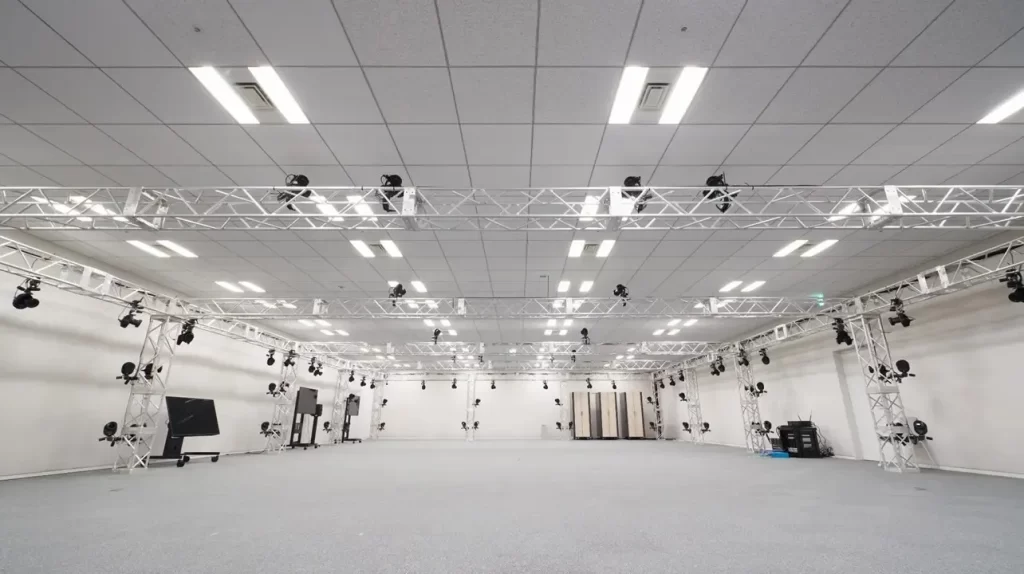
Then, we worked together to create a streaming environment that would allow us to actually stream from our studio, while discussing details, such as “where we need power outlets” and “where the best place is to install equipment.”
When streaming using Self Booth 3D, we still consult with the Livestream Technology Division to determine where to draw the line between areas where we provide support to talents and areas where we ask them to handle things themselves.
―How did you make it easy to use, given that talents operate the app themselves?
We have examined every corner of the UI to determine how to best balance usability and quality. Since our talents would be using the app for the first time, we made sure to provide thorough training on how to use it before it was implemented, as well as to communicate in advance that there are movements the app can and cannot handle well.
Since the streaming app for Self Booth 3D is operated by the talents themselves, we develop the app while keeping in mind that it can be used in a similar way to the one used in their usual 2D streams. Unlike the traditional feature-rich app we use in our studios, we prioritized ease of use when developing this app, which I believe contributes to the flexibility of the actual operations.
We constantly monitor inquiries arising on set and listen to requests from talents about what they would like to do. By setting priorities for these needs and submitting them to the Technology Development Division as development proposals, we aim to evolve the app into something more user-friendly and capable of expanding what talents can do.
―How did the workload for preparation and on-site operations change after introducing Self Booth 3D?
It has changed dramatically. Previously, a 3D stream required booking a studio for at least three days—one day for preparation, one day for rehearsal, and one day for the stream. With Self Booth 3D, the entire process is generally completed in a single day. Even for streams requiring extensive preparation, securing an additional half a day the day before is sufficient.
The difference in required human resources is significant as well. While traditional 3D streaming projects require staff to begin preparation six months in advance, Self Booth 3D allows them to complete the whole process—from making requests to organizing requirements to running a stream—within one to two weeks.
―What kind of feedback did you receive from the talents and fans after putting it into operation?
We often hear talents say, “This is great!” Previously, a full-scale 3D stream was something like a fancy restaurant, and talents could only hold one a few times a year on special occasions. In contrast, I think Self Booth 3D is more like a casual dining restaurant where they can easily drop by. We have also received enthusiastic support from fans who had awaited 3D casual chat streams and gaming streams, with comments like, “This is what we needed!”
We also hear fans say “It’s nostalgic and reminds me of the early days of hololive.” Our approach of figuring things out as we go and the process of bringing ideas to life through trial and error at that time may come across as novel to them now.
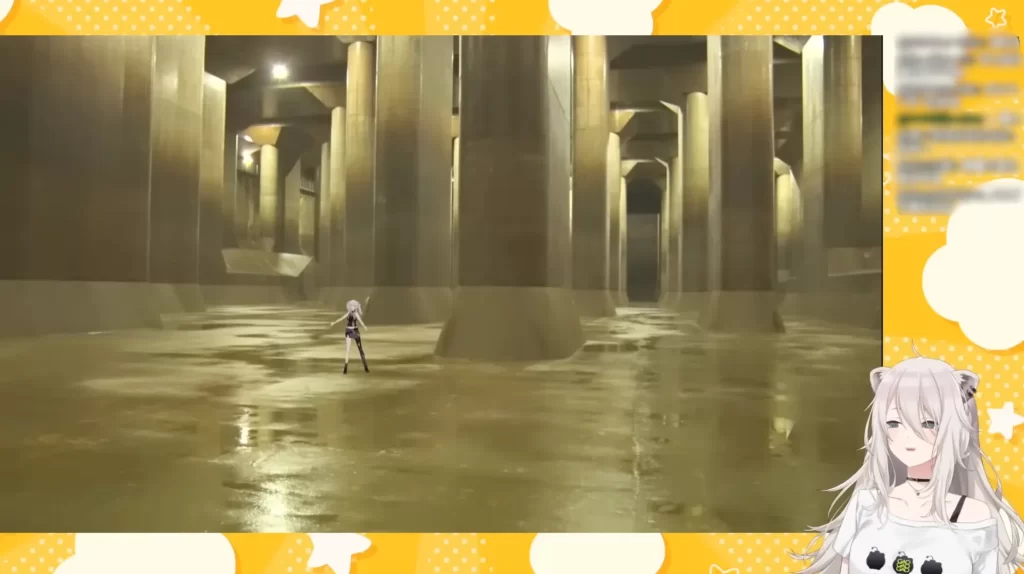
Another strength of Self Booth 3D is its high portability, allowing it to be installed anywhere that meets certain space and environmental requirements. In the initial conceptual stage, we even had the idea that if we could set up equipment for Self Booth 3D in talents’ homes, we would be able to create an environment where they could stream in 3D every day. I believe that this advantage of being able to stream anywhere without being restricted by location will continue to be one of our major strengths. While there are still challenges we need to resolve, such as maintenance-related issues, we’d like to keep testing the system so we can deliver content more flexibly, regardless of location.
―Among all the past projects and programs that used Self Booth 3D, is there any one that is particularly memorable for you?
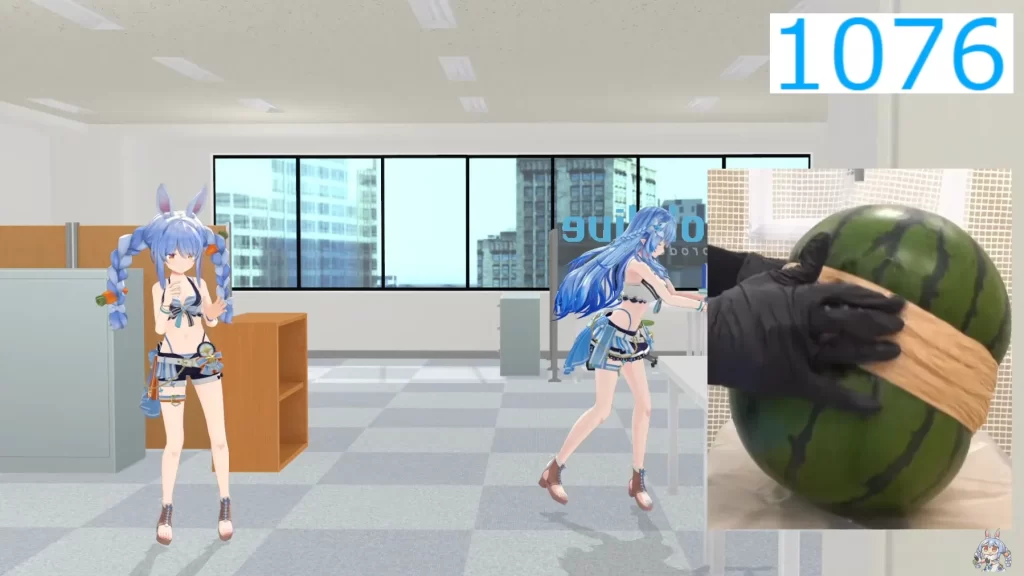
The most memorable one was the ”輪ゴムでスイカ割り (Splitting a Watermelon with Rubber Bands)(Available in Japanese only)” project with Usada Pekora and Lamy Yukihana. On the first attempt, the watermelon rolled off the table, leaving everyone feeling rather unsatisfied, but it turned out that there was actually another watermelon, and we quickly organized to have a second attempt. For round two, they were even creative with the floor material and the way they secured the watermelon, making the second attempt a complete success. I felt a unique passion that only Self Booth 3D can produce, watching on as the on-site team really racked their brains to figure out how to turn what the talents want to do into reality.

(Available in Japanese only)
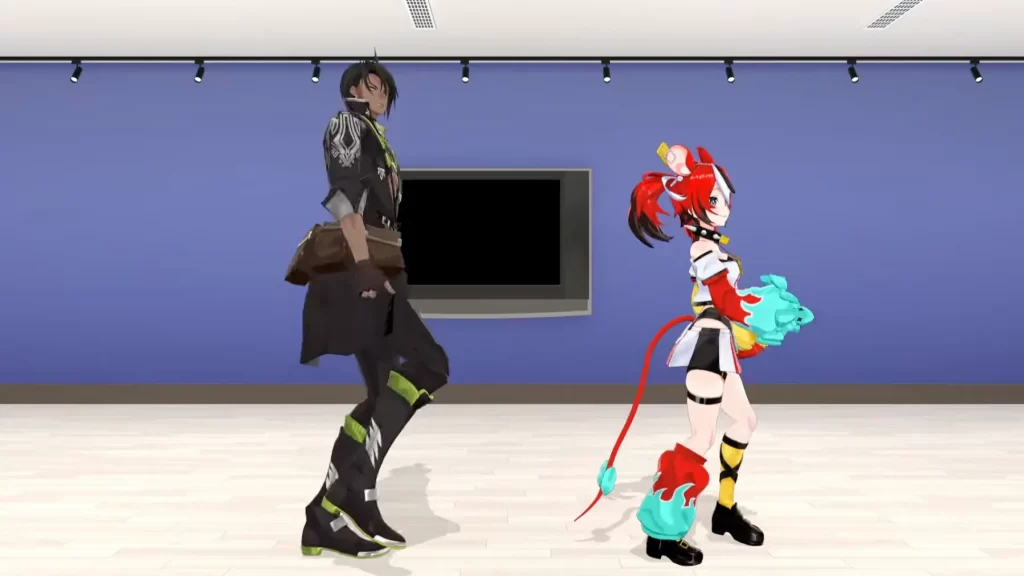
The stream where Aragami Oga from HOLOSTARS learns how to dance from Hakos Baelz as part of the ”ダンスを教えて!ベールズ先生! (Teach Me How to Dance, Miss Baelz!)(Available in Japanese only)” series left an impression on me as someone working in technical development. Self Booth 3D cannot accurately handle detailed or fast movements, but this content shows Oga, who is a complete beginner, naturally practicing a dance slowly and earnestly. This kind of content really suits the specifications of the Self Booth 3D system, and I also felt that it was a powerful example of content showing a hidden side of our talents.

―Talents plan and carry out a wider range of projects now, don’t they?
That’s right. Building a portfolio was the biggest challenge at first. After holding hands-on sessions for talents and seeing their positive responses, we gradually expanded the use of the system by saying, “We will support you as much as possible, so let’s just give it a try.” Thankfully, they use the system today without any prompting, but back then, we were really busy trying to get them to adopt it.
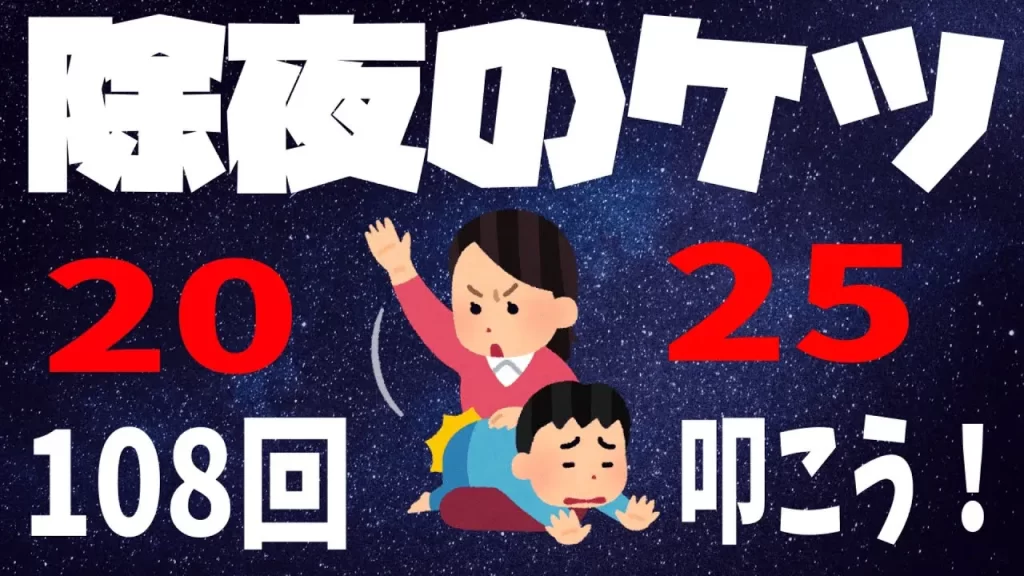
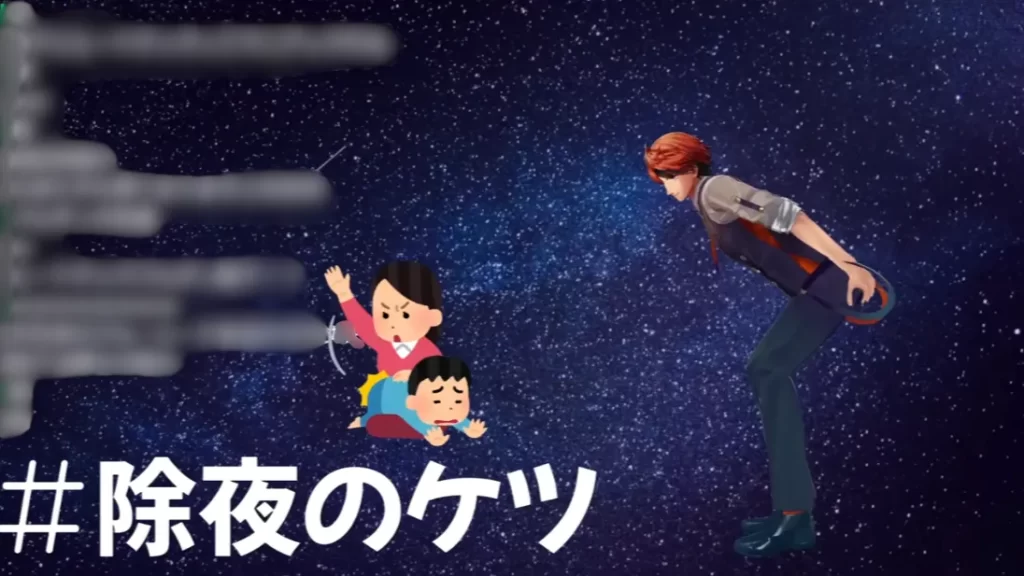
For example, “除夜のケツ (Butts on New Year’s Eve)(Available in Japanese only),” the livestream Yukoku Roberu hosted at the end of the year, was made possible because we pitched the system directly to his manager, by telling them, “Don’t you think it’d be fun if we did it using Self Booth 3D?” Of course, there are also times when talents come up with ideas or proposals that they want to do, and we make every effort to bring them to life, just like the “watermelon splitting” project. Although we take different approaches depending on the project, we are always committed to expanding technological possibilities and turning whatever they want to try into reality.
Since we are continuing to develop Self Booth 3D while also testing its functions with on-site staff, talents are often surprised by what it can do, and we are also constantly discovering new possibilities, which makes us think about how much potential there still is with the system. I feel we are in the most exciting phase yet, exploring and pursuing every possibility the system has to offer.
I believe fans can sense that we are in an environment that allows us to quickly bring talents’ ideas to life. As a member of the Technology Development Division, I’d like to continue to pioneer new forms of COVER’s entertainment.
Potential Future Projects with Self Booth 3D
―Are there any projects that you would like to try in the future or you haven’t had a chance to try yet?
We are receiving requests to run a cooking stream using open flames, but since open flames are strictly prohibited in our studios, we’ve had to decline these requests so far. However, we think we can do it if we can bring the equipment into a kitchen studio or somewhere similar. We now think we can even manage to do it if we only cook by keeping food warm on an induction cooktop. Someday, I’d also like to try something crazier, like a tuna-cutting show.
Some talents have also said they would like to try a lotion sumo match, but it’s difficult to accommodate, considering the impact on the equipment. However, it’s fun to brainstorm solutions for such out-there requests, and I feel most energized when I’m trying to figure out how to make it happen.
As someone who has to ensure quality, I often get nervous, worrying whether or not everything will go well. But even so, I really enjoy such a chaotic and lively atmosphere, which reminds me of the early days of hololive. I feel we are in an incredibly exciting phase where we can pioneer new forms of streams together with our talents.
―What are each of you working on to further evolve the system?
As someone who acts as a bridge between the development and on-site operations, I’d like to continue optimizing both sides. There is still so much to do, such as integrating our studio-based technology developed through top-quality anniversary 3D streams into Self Booth 3D and balancing the streaming app’s usability with staff’s operational flexibility. We want to tackle these tasks step by step, starting with a solid operational structure.
We’re taking on more and more fresh challenges in new environments, such as using the system outside our studios, so to support these use cases, we plan to keep updating the app and expanding what it can handle.
On the technical side, there’s still plenty of room for improvement in tracking quality, so we’ll work to improve accuracy as much as possible while maintaining the ease of use, and strive to close the quality gap with traditional 3D streams.
I think talents themselves may still be unsure about how far they can go, so we’d like to keep being proactive and providing them with suggestions. By enhancing technical support, we want to build an environment where they feel confident taking on new challenges.
―How do you expect Self Booth 3D to evolve and its scope of application to expand in the future?
In addition to live music performances, I’d also like Self Booth 3D to make a wide variety of projects a reality. We hope to build collaborative relationships with talents so that we can work together to nurture those projects.
I’d like to expand the use of Self Booth 3D into other internal divisions that haven’t yet utilized it. When our sales or public relations team wants to present shows in a newer, more innovative way, I hope the Technology Development Division and the Livestream Technology Division can support them and ensure they consider Self Booth 3D as one of their options.
I believe one of our talents’ biggest charms is the gap between their stunning presence on stage and their true selves shown in their streams. It would make me so happy if giving glimpses of their everyday side using Self Booth 3D also helps to attract new fans who realize that hololive has such interesting people!
Our talents always have control over their choices, which is precisely why we want to empower them through our technology to ensure we are still beneficial to them.